Learn guitar online from zero: a realistic 30-day plan
26 November 2026 · Dr Banerjee · 9 min read
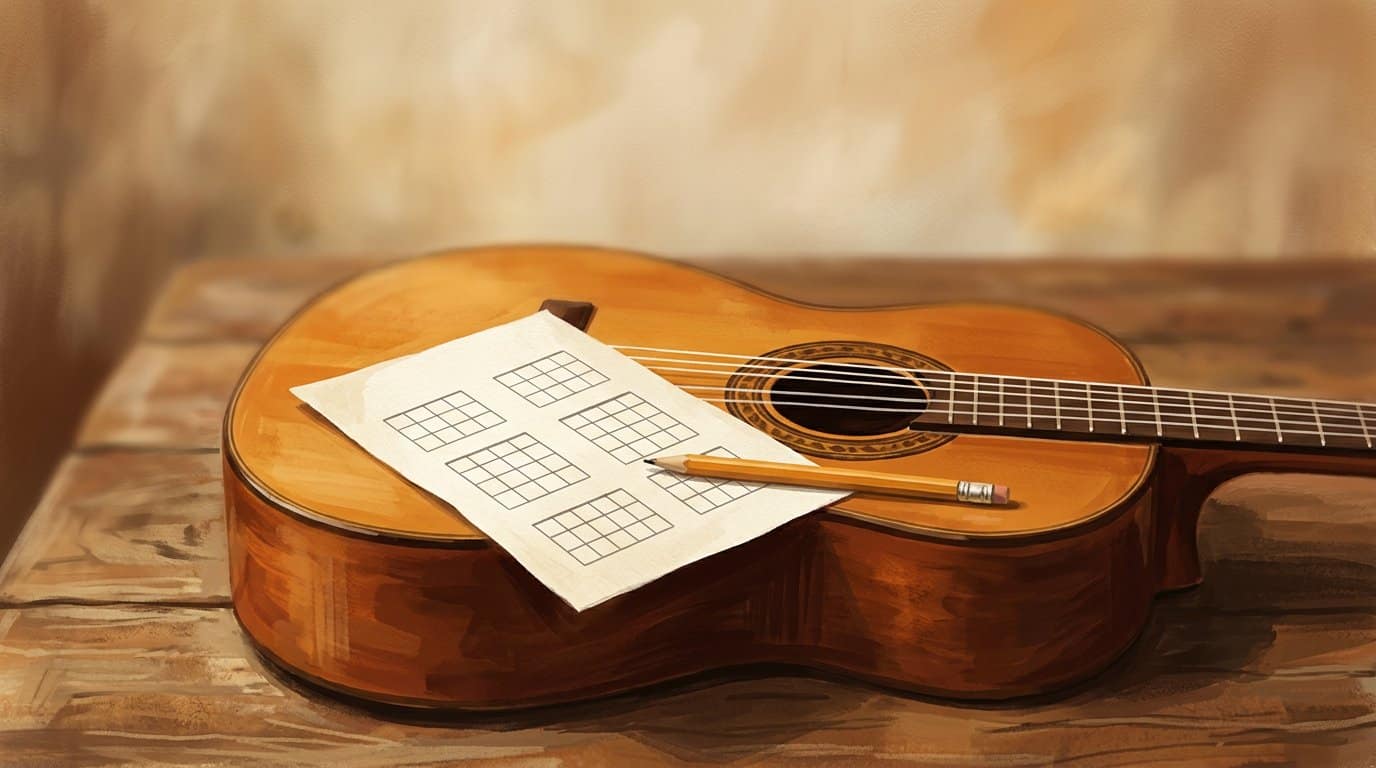
Thirty days will not make you a virtuoso, but they will turn you into someone who plays a complete song. That is the honest goal of the first month, and it is enough to hook you to the instrument.
Before the first class
- Instrument: any tuned guitar will do. Don't buy anything expensive yet.
- Tuner: a free app on your phone. Playing out of tune is learning to sound bad in style.
- 15–20 minutes daily: better 15 every day than two hours on Sunday.
Week 1 — Posture, tuning and the two magic chords
Sitting posture, relaxed wrist, and the chords Em and Am. No strumming yet: just clean finger placement, counting strings out loud and listening to each one separately. Goal: all six sounds clean, no cheating.
Week 2 — The jump: C, G, D and A minor
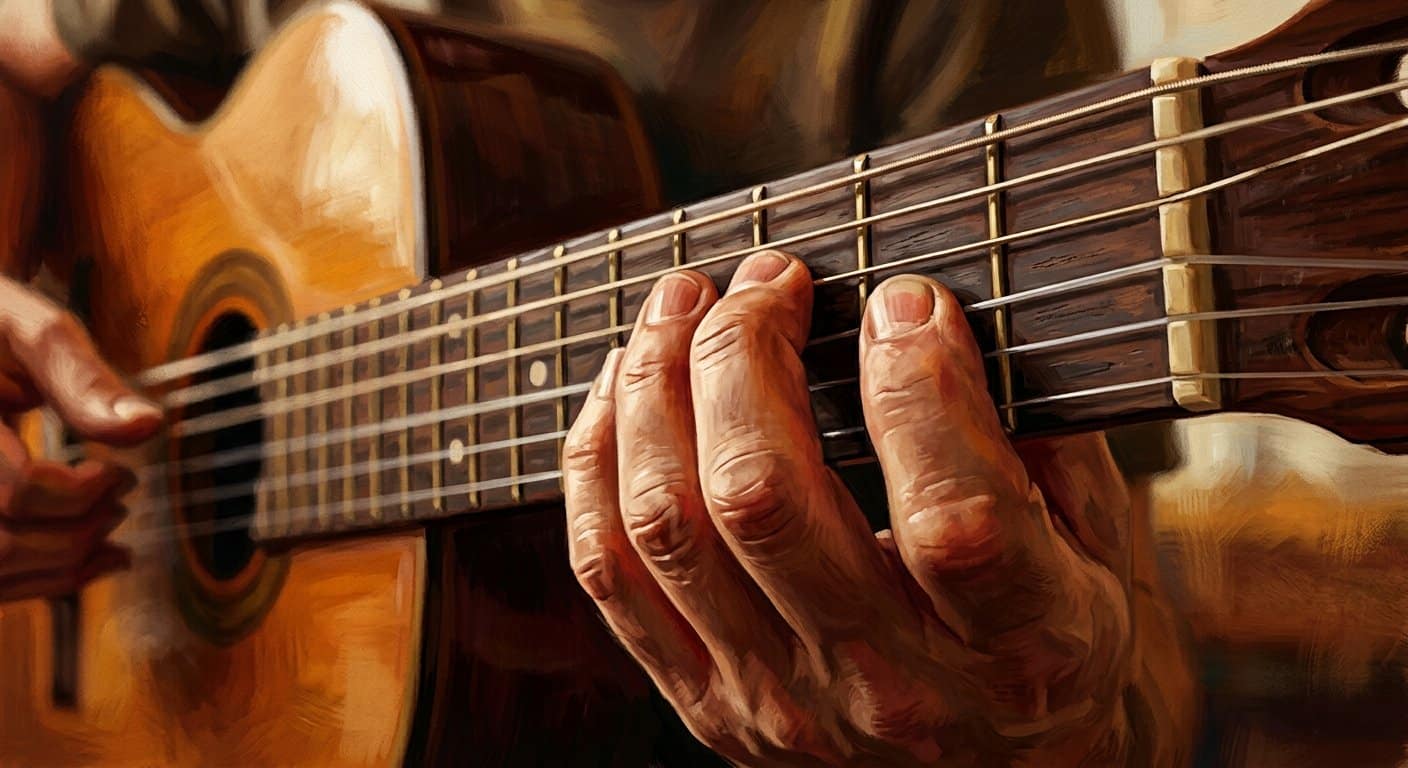
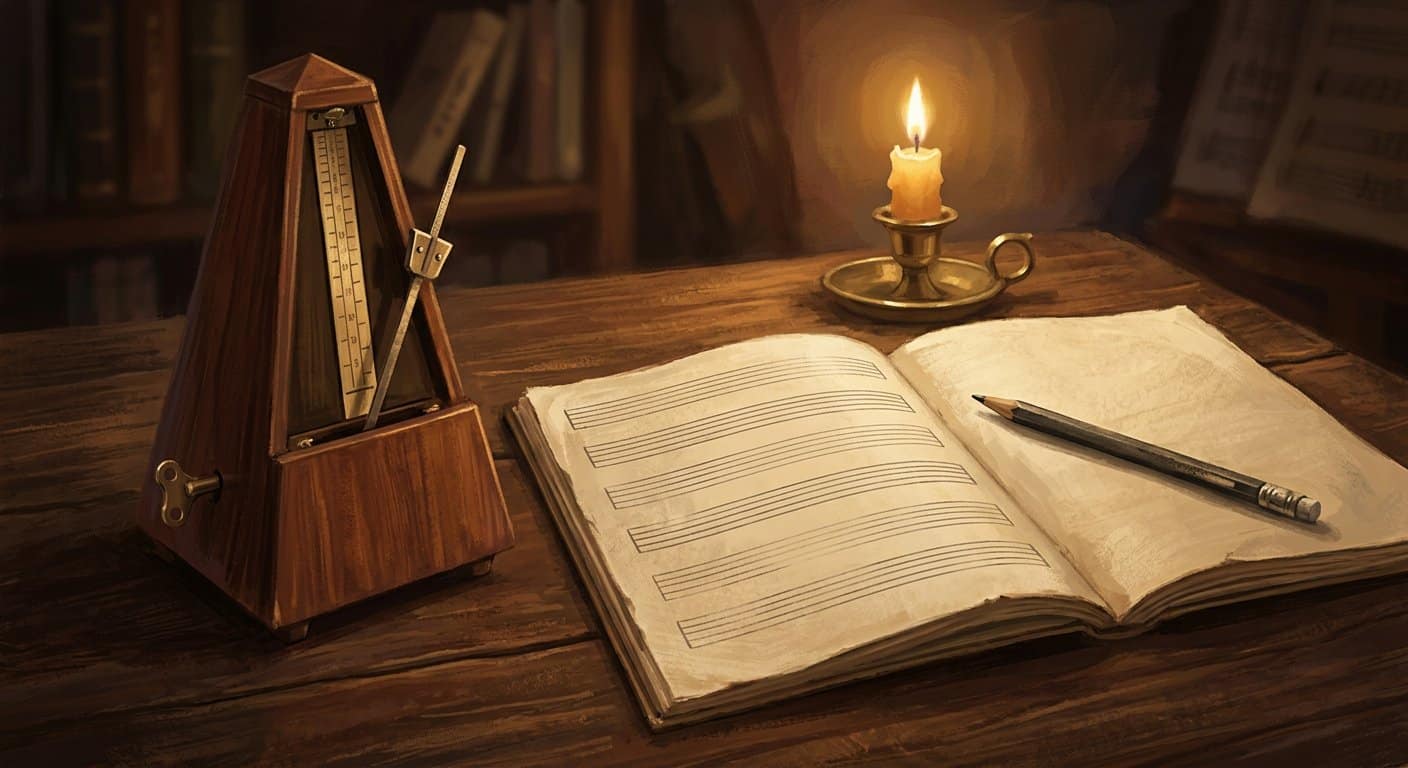
This is where fingertips hurt and where most people quit without a guide. We drill the Em→Am→C→G change with a slow metronome (60 bpm), one notch faster per session. Strumming: down, up, down-up.
Week 3 — Your first complete song
We pick ONE song with 3–4 chords (think "Wish You Were Here", a bolero, or the pop song in Spanish you already know). We rehearse the whole structure, slowly, no stopping halfway even if it comes out rough. The brain learns more from playing through than from perfecting isolated bars.
Week 4 — Rhythm, dynamics and recording
We liven up the strum with dynamics (soft/loud), change key once if it's already flowing, and record the complete song on your phone. Hearing yourself from outside is worth more than any teacher correction.
The mistakes that stall every beginner
- Practising without a metronome, "by eye".
- Switching songs every week instead of finishing one.
- Skipping tuning "because it sounds fine".
- Pressing too hard: clean sound asks for economy, not force.
Video: chord lessons on my YouTube channel
If you prefer learning by watching, my YouTube channel has the playlist Song Chords: Hindi and pop songs broken down chord by chord, with the same patience I use in class.
And the day after day 30
Once one complete song sounds, everything else is expansion: more chords, barre chords, fingerpicking. The hard part — consistency — is already won. If you want me to guide your plan, write and we will book your free session.
Week-by-week detail for the plan
Week 1 builds the physical setup: chair height, guitar angle, wrist neutrality. Week 2 is the chord vocabulary Em, Am, C and G with a slow metronome. Week 3 assembles your first full song with one strumming pattern. Week 4 adds dynamics and a recording of the finished piece — proof, not promises.
Expect sore fingertips for two weeks; that is the skin thickening, not injury. Sharp pain is different — stop and tell me; technique should never hurt.
Classical or steel-string to start?
Nylon (classical) is the friendliest; steel-string changes tone and tension — either works, just tell me which you have.
How long until I play songs?
With 15–20 minutes daily, most students complete their first song in 3–4 weeks.
Can I learn electric guitar here?
Yes — same foundation, plus pick technique and power chords once the basics hold.