Flamenco online: can you learn cante and guitar from home?
26 November 2026 · Dr Banerjee · 8 min read
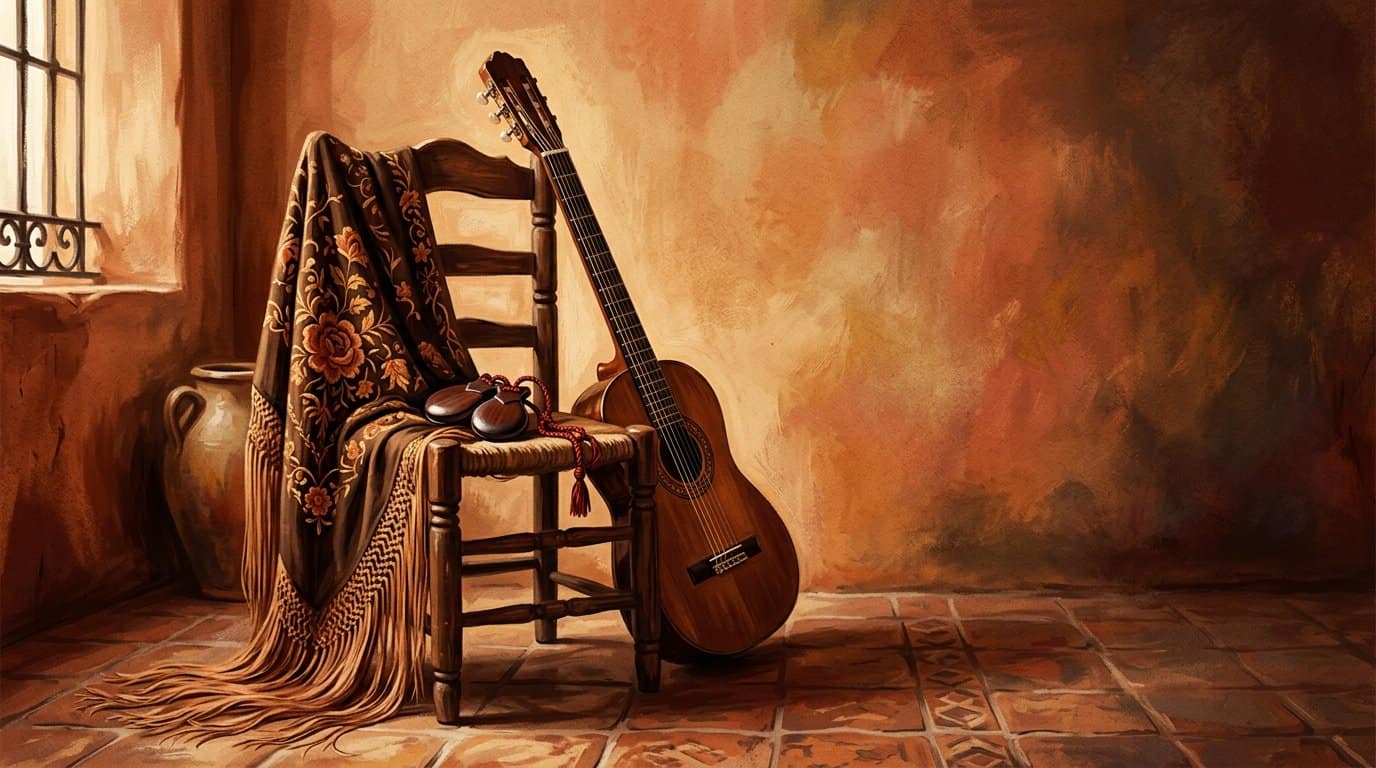
You can, and more people do it than you think. Flamenco does not ask for tablao boards to begin; it asks for compás, tuning and consistency — three things a video call conveys perfectly well when the camera is where it needs to be. What never works is the shortcut: flamenco is built by ear, not by the fifth YouTube video you half-watch.
What happens first, in an honest order
- Compás. Tangos and tientos first (4-beat compás, slow and deep), then the 12-beat world: tangos, alegrías and fandangos. Before anything is played or sung, you count and you clap.
- Posture and rasgueo. Loose wrist, confident thumb, and the difference between a free strum and an accented one. No harsh attack until month three.
- The singer's tuning. Breathing from low, holding the note without squeezing the throat, and starting to recognise what a letras verse does — which line opens, which one closes.
- First repertoire. Tangos, simple alegrías, basic bulerías. One palo learnt properly beats ten skimmed ones.
Why a live teacher and not an app
Apps give you repertoire; they do not correct your thumb, your breath or the accent drifting off the compás. In a live class I can stop a rasgueo on its second compás and say "there — just that, again." That one correction, repeated weekly, is what turns sounding busy into playing.
The mistakes that stall everyone who starts
- Improvising cante before the compás has settled.
- Choosing palos far away from your voice or your guitar because "they sound cool".
- Practising fast from day one: flamenco rewards elegant slowness.
- Neglecting the palmas because "they're for other people": they are flamenco's drum kit.
What a class costs
One-to-one classes on Zoom, same fee as the rest of my subjects: €16 per 45–60 minute class, or €64 a month with the 4-class bundle. Group classes are rarely the right format for flamenco — the work is very personal. Before you decide, book your free session of 15–30 minutes and we will take a first pass together.
Prefer flamenco inside the wider map? It is family no. 01 in the map of 24 genres — and I also teach it alongside guitar, piano, singing and harmonium.
What progress looks like, week by week
Week one: posture, compás counting and open strings. Weeks two to four: rasgueo patterns (alternating down, up-up, tresillo) and your first tangos. By week six most beginners can hold a slow 12-count compás and play a simple falsetto line. Singing students start with breath and vowel placement before any letras.
Flamenco is not learnt by copying a performance video; it is learnt by slowing the compás down until the accents land, then speeding up only when the palmas keep the beat. That is why every class starts with the metronome or with palmas — even for singers.
Do I need a flamenco guitar to start?
Any guitar works for the first weeks; a flamenco guitar matters when rasgueo dynamics and golpes come in — I will tell you exactly when to upgrade.
Can adults really learn flamenco from zero?
Yes — most of my students start between 18 and 60. The compás is trained like a language, not a talent.
How is cante different from pop singing?
Cante is phrasing, placement and intention over a strict compás; we work breath, vibrato and palmas first, then letras and styles such as fandangos, soleá and alegrías.