Do online music lessons work? What the experience says
26 November 2026 · Dr Banerjee · 8 min read
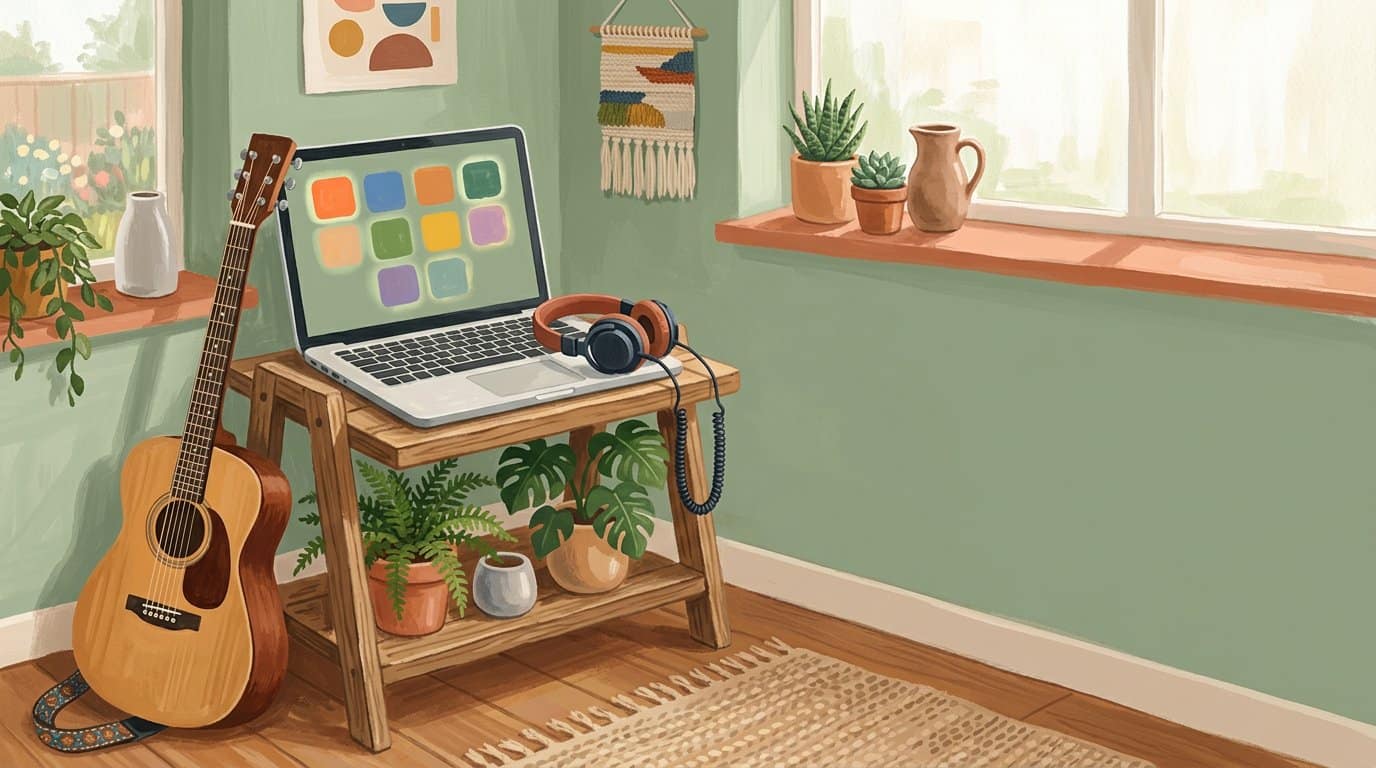
I have taught every one of my classes over Zoom since 2020. In that time I have seen it work brilliantly and fail with enthusiasm. The difference is almost never the instrument: it is the method.
When the online class wins
- Consistency: with no travel, fewer classes are missed. Consistency beats intensity.
- Recording: you can rewatch the exact class you had, with my corrections included. No neighbourhood academy gives you that.
- Specific teachers: you want harmonium, bansuri or Carnatic singing in Bilbao — it used to be impossible, now it is one Zoom.
- Adults with a real diary: 45 minutes between meetings or after the kids are asleep.
When it does not win
- Instruments with critical physical contact (cello, double bass) need more adjustments or occasional in-person visits.
- Very small children (under 7) with limited attention: in-person is better if it is close enough.
- Unstable connection: broken audio kills musical ears. If your internet fails, the class fails.
What to demand from your online teacher
- The same teacher always, not a rotation of "whoever is available".
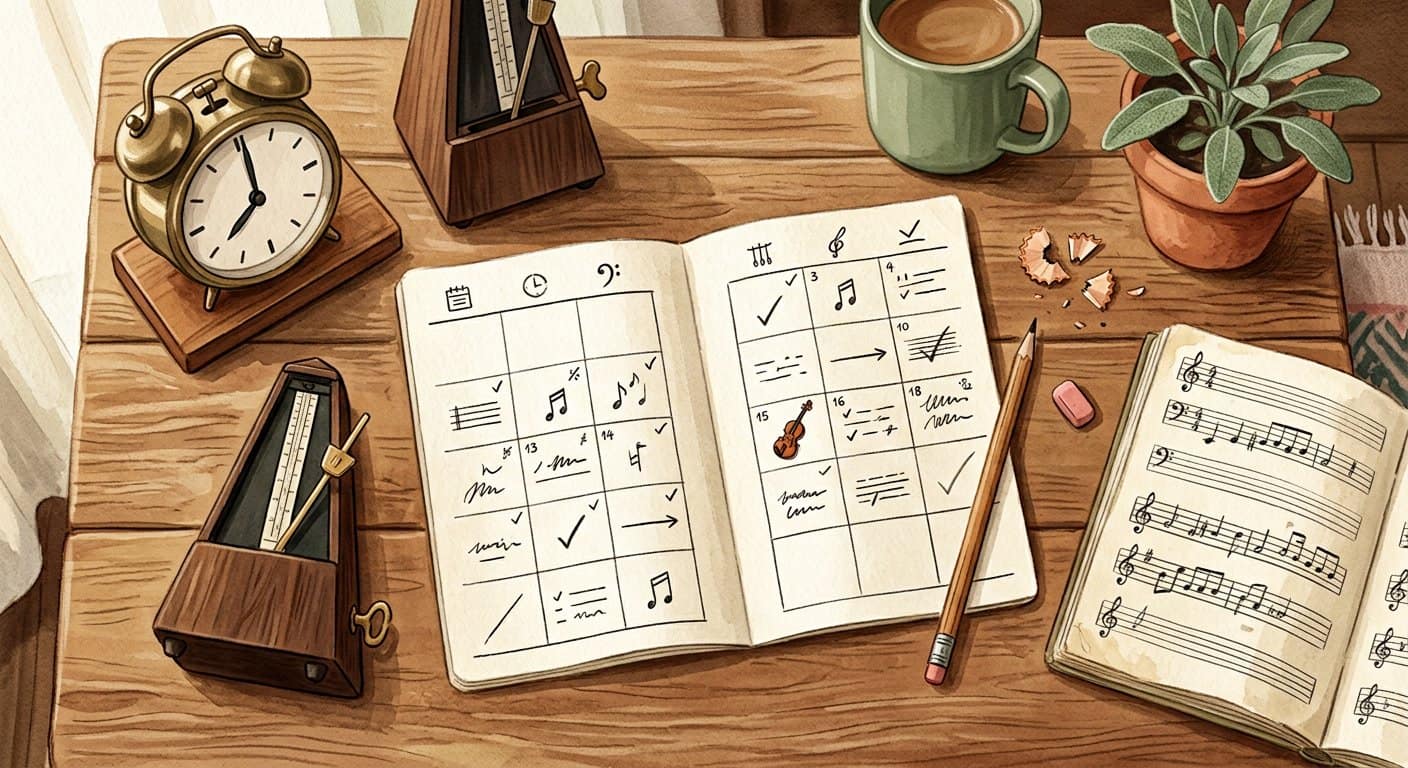
- Written practice notes after every class.
- Good audio quality and headphones, so they can actually hear you.
- A plan built around your target repertoire, not "lesson 5 of the book".
The short answer
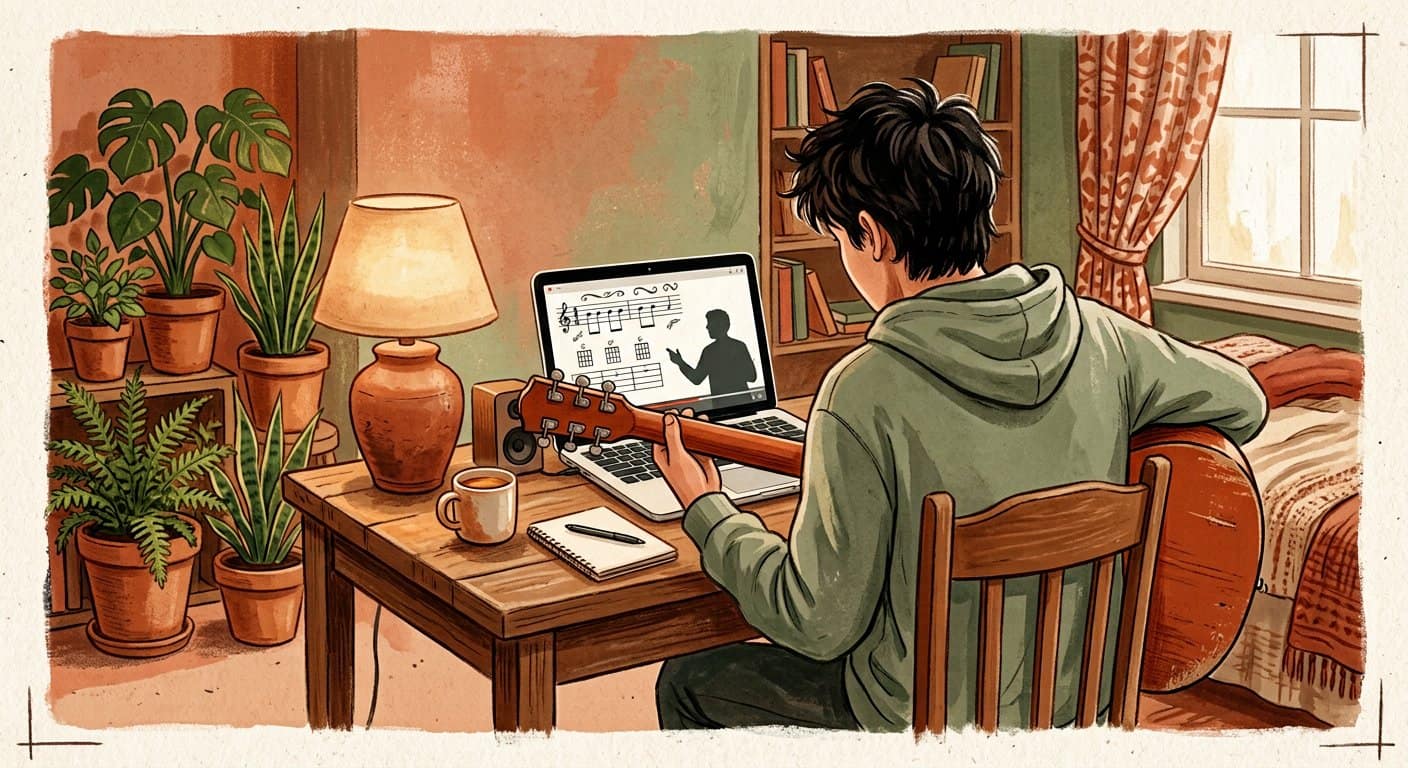
Online lessons work if the teacher is real, the method is clear and you practise between classes. They fail the same way in-person lessons fail: without practice there is no music, online or in person.
What my diary shows, six years in
Students who practise 4+ days per week progress roughly twice as fast as those who practise twice, regardless of format. The single biggest predictor of success is a fixed weekly slot you protect — not the teacher, not the platform, not the instrument.
Since 2020 every class I teach is on Zoom; the ones that fail share one trait: the student stopped turning up. If you show up, I will do the rest.
How long are one-to-one classes?
45–60 minutes; groups are 5–8 students on a fixed timetable at €88 per student per month.
Can I record my lessons?
Yes — recording your own class is one of the biggest structural advantages of online.
What if my schedule changes?
Reschedule with at least 12 hours’ notice; slots are fixed but flexible with enough notice.